
Avobenzone is one of the most studied sunscreen ingredients in modern skincare, and debates surrounding its safety continue to attract global attention.
Millions of people use avobenzone-containing products daily to protect their skin from UVA rays. Simultaneously, scientific studies are delving deeper into its skin absorption, chemical stability, skin reactions, and environmental impact.
Understanding avobenzone helps consumers make informed choices and develop more effective skin protection strategies.
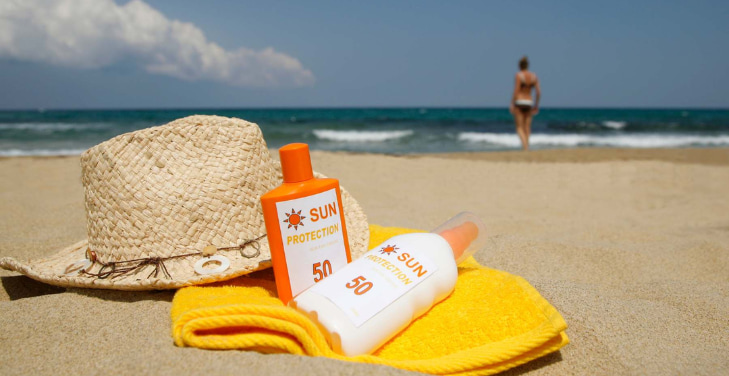
Avobenzone protects against UVA rays while raising questions about ingredient stability.
What Is Avobenzone and Why Is It Used in Sunscreen?
Sunlight delivers a large amount of ultraviolet radiation directly to the skin every day. Among modern sunscreen ingredients, avobenzone plays a crucial role due to its ability to absorb energy from UVA rays and help protect the skin's structure from environmental factors.
What Is Avobenzone?
Avobenzone is an organic compound belonging to the group of ultraviolet filters. This ingredient absorbs a broad spectrum of UVA rays, especially in the wavelength range associated with skin aging. When exposed to sunlight, avobenzone converts UV energy into a lower-energy form, thereby helping reduce oxidative stress on skin cells.
Why Sunscreen Formulas Use Avobenzone
Many manufacturers choose avobenzone because of its ability to enhance protection against UVA rays. This ingredient helps complete the sun protection spectrum, supports skin elasticity, and helps limit the appearance of sun-induced wrinkles. Modern sunscreen formulas often combine avobenzone with various other UV filters to enhance protection during prolonged sun exposure.
Common Products Containing Avobenzone
Avobenzone is found in many sunscreens, day creams, SPF foundations, and multi-functional skincare products. Its widespread presence reflects its crucial role in protecting skin from ultraviolet radiation.
Is Avobenzone Safe? Understanding Regulatory Assessments
The safety of avobenzone has always attracted attention from scientists, regulatory agencies, and consumers. Health organizations use toxicity data, exposure levels, and human studies to assess the impact of this ingredient in sunscreens.
Regulatory Review Process
Regulatory agencies conduct a rigorous scientific review of avobenzone. They consider its chemical properties, skin absorption, actual exposure levels, and published safety data. This process helps determine its suitability for use in cosmetics and skin protection products.
Current Safety Findings
Current assessments indicate that avobenzone meets safety standards when used as directed by the manufacturer. Research data provides the basis for experts to continue allowing this ingredient in many broad-spectrum sunscreen formulations. The results also support the monitoring of the quality and effectiveness of skin protection against UVA rays.
Ongoing Scientific Monitoring
Science is constantly updating its data on sunscreen ingredients. Researchers continue to monitor the absorption, metabolism, and biological effects of avobenzone to expand our understanding of its long-term safety. This ongoing monitoring helps to make the evaluation system increasingly accurate and comprehensive.
Potential Avobenzone Dangers Linked to Skin Reactions
Skin reacts to cosmetic ingredients in various ways. While avobenzone plays an important role in protecting the skin from UVA rays, some people may still experience skin reactions related to individual sensitivity and skin barrier characteristics.
Contact Dermatitis and Sensitization
Some cases of contact dermatitis have been reported after using products containing avobenzone. This reaction usually occurs when the immune system recognizes the chemical as an irritant. Users may experience itching, burning, or red patches of skin at the application site.
Common Signs of Skin Irritation
Skin irritation often manifests as a stinging sensation, dryness, or increased skin sensitivity. These symptoms may appear shortly after contact with the product. The degree of reaction depends on skin condition, frequency of use, and combination with other active ingredients in the formula.
Factors That Increase Reaction Risk
Sensitive skin, a weakened skin barrier, and a history of cosmetic allergies increase the likelihood of skin reactions. High ambient temperatures, excessive sweating, and prolonged sun exposure can also make skin more prone to irritation when using chemical sunscreens.
Can Avobenzone Be Absorbed Into the Body?
The absorption of sunscreen ingredients has always been a subject of in-depth research in dermatology and toxicology. Avobenzone is in direct contact with the skin surface for many hours, so scientists are particularly interested in its journey after it is applied to the body.
What Research Reveals About Absorption
Pharmacokinetic studies show that some avobenzone can penetrate the stratum corneum and enter deeper layers of the skin. Small amounts of the active ingredient may also appear in the circulation after repeated application over large areas of skin. This finding helps researchers better understand the actual level of exposure of the body to sunscreen ingredients.
Factors That Influence Uptake
The degree of absorption depends on many factors such as the concentration of avobenzone, the area of application, the frequency of use, and the condition of the skin barrier. Thin, damaged, or high-temperature skin often increases the absorption of topical active ingredients.
Why Absorption Matters
Absorption data plays a crucial role in safety assessments. Regulatory bodies use this information to establish usage limits, testing guidelines, and quality control standards for modern sunscreen products.
Concerns About Hormonal and Endocrine Effects
The endocrine system coordinates a wide range of life functions through a complex network of hormones. Because some UV filters can enter the body in small amounts after application to the skin, scientists have expanded research to understand whether avobenzone produces hormone-related biological effects.
Why Endocrine Activity Draws Attention
Researchers are focusing on potential interactions between chemical and hormonal receptors in the body. This topic is of great interest because hormones regulate growth, energy metabolism, reproduction, and physiological balance. Any biological signals related to the endocrine system are of significant research value.
Evidence From Laboratory Studies
Several laboratory studies have investigated the biological activity of avobenzone in cells and experimental models. The results provide data on how this compound interacts with molecular mechanisms involved in hormone signaling. These findings contribute to building a scientific foundation for more in-depth safety assessments.
Current Scientific Perspective
The scientific community continues to gather data from epidemiological, toxicological, and molecular biological studies to clarify the clinical significance of existing findings. Long-term follow-up helps refine understanding of the relationship between avobenzone and endocrine activity under real-world use conditions.
Avobenzone Stability Issues and Chemical Breakdown
The effectiveness of a sunscreen ingredient depends heavily on its stability when exposed to sunlight. Avobenzone absorbs UVA radiation well and undergoes complex chemical transformations under UV irradiation. This characteristic makes avobenzone's stability a crucial topic in cosmetic and dermatological research.
How Sunlight Affects Avobenzone
When absorbing UVA rays, the molecular structure of avobenzone undergoes a continuous energy transition. A portion of the molecule may change its chemical state after prolonged exposure to sunlight. This reduces its ability to absorb ultraviolet rays and affects the product's protective performance on the skin.
Modern Strategies to Improve Stability
Formulator developers employ various solutions to increase the stability of avobenzone. Some products combine avobenzone with photostabilizers to maintain sun protection effectiveness for longer periods. Advanced microencapsulation and emulsion technologies also help protect the molecule from light-induced degradation, thereby improving the performance and reliability of modern sunscreens.
Environmental Concerns Associated With Avobenzone
Sunscreen ingredients are present on the skin every day and eventually enter the environment through bathwater, swimming pools, rivers, lakes, or wastewater treatment systems. The popularity of avobenzone has spurred extensive research into how this compound interacts with natural ecosystems after leaving the human body.
Presence in Aquatic Environments
Scientists have found traces of avobenzone in various water sources. This compound travels with water from daily activities and appears in the environment at concentrations that vary by region, population density, and sunscreen use.
Potential Effects on Marine Life
Environmental research focuses on the effects of avobenzone on aquatic organisms, including algae, invertebrates, and fish. Some data suggest that this compound may impact the growth, energy metabolism, and biological responses of aquatic species with prolonged exposure.
Ongoing Environmental Research
Scientists continue to assess the potential for avobenzone to degrade, accumulate, and spread within ecosystems. New data will help environmental managers develop appropriate control strategies and support the cosmetics industry in developing more environmentally friendly formulations.
Who May Want to Be More Cautious With Avobenzone Products?
Each skin type uniquely reacts to personal care products. While avobenzone offers UVA protection, certain groups need to pay more attention to how they choose and use products to optimize skin comfort and daily use.
People With Sensitive or Reactive Skin
Individuals with sensitive skin are more likely to experience stinging, burning, or discomfort upon contact with active cosmetic ingredients. These individuals benefit from testing products on a small area of skin before widespread use. Monitoring skin reactions helps determine whether avobenzone-containing formulas are suitable for their personal care needs.
Individuals With a History of Cosmetic Allergies
Individuals who have previously experienced reactions to cosmetics or skincare products should pay closer attention to ingredient lists. A history of allergies reflects a heightened sensitivity of the immune system to substances that come into contact with the skin. Choosing products with simple formulas, combined with dermatologist evaluation, helps build a suitable sun protection strategy and enhances peace of mind during long-term use.
Alternatives to Avobenzone in Sunscreen Products
The modern sunscreen market offers many alternatives to avobenzone to meet different skin needs and personal preferences. Each UV filter has unique characteristics in terms of spectral protection, stability, and skin feel, creating a variety of solutions for consumers.
Mineral UV Filters
Zinc oxide and titanium dioxide are two common mineral filters in physical sunscreens. These minerals form a protective layer on the skin's surface, helping prevent ultraviolet rays from penetrating. Zinc oxide is particularly valued for its broad-spectrum UVA and UVB protection, enhancing the effectiveness of sun protection.
Other Chemical Sunscreen Filters
Many sunscreen formulas use other chemical filters such as Mexoryl, Tinosorb, or Uvinul. These ingredients absorb energy from UV rays and convert it to a lower-energy form. Continuous technological advancements enhance the optical stability and protective performance of next-generation filters.
Choosing the Right Sunscreen
Choosing the right product depends on your skin type, the intensity of your sun exposure, your activity environment, and your personal preferences. A formula with broad-spectrum protection, a comfortable feel on the skin, and the ability to maintain effectiveness throughout use will provide the optimal sun protection experience.
What Recent Research Says About Avobenzone
Recent studies continue to clarify the safety profile of avobenzone through toxicological data, exposure assessments, and human monitoring. A 2025 scientific review comprehensively analyzed its skin absorption, metabolism, endocrine activity, immune response, and carcinogenicity, providing further basis for assessing its safety in skincare products.
The study results indicate that avobenzone maintains a safe profile when present in sunscreens at concentrations permitted by regulatory agencies. The data also show low skin absorption, low risk of irritation, and stable UVA protection efficacy when formulated with photostabilizing enhancers. These new findings further support the optimization of sunscreen formulations and expand our understanding of skin protection efficacy under real-world conditions.
Scientific References
- Comprehensive review of avobenzone (butyl methoxydibenzoylmethane) toxicology data and human exposure assessment for personal care products. PubMed: https://pubmed.ncbi.nlm.nih.gov/40910486/
- Full-text article – Critical Reviews in Toxicology. https://www.tandfonline.com/doi/full/10.1080/10408444.2025.2535394
Conclusion
Avobenzone plays a crucial role in many sunscreens due to its ability to absorb UVA rays and help protect the skin from sun damage. Scientific research continues to expand our understanding of its absorption levels, chemical stability, skin reactions, and environmental impact.
Evaluating avobenzone requires a comprehensive perspective based on toxicological, dermatological, and public health data. Accurate knowledge helps consumers choose products that suit their individual needs and develop effective sun protection habits to maintain long-term skin health.
Frequently Asked Questions (FAQs)
- Does avobenzone enter the bloodstream? – Small amounts of avobenzone may be absorbed through the skin and detected in the bloodstream after widespread application. Researchers continue to evaluate the biological significance of this absorption.
- Can avobenzone cause skin irritation? – Some individuals with sensitive skin may experience redness, itching, or stinging after using products containing avobenzone. The reaction varies based on skin type and product formulation.
- Why is avobenzone used in sunscreen? – Avobenzone absorbs UVA radiation effectively, helping provide broad-spectrum sun protection and supporting long-term skin health by reducing cumulative photodamage.
- Is avobenzone harmful to marine ecosystems? – Scientists continue to study the environmental effects of avobenzone on aquatic ecosystems, including its distribution, breakdown, and potential impact on marine organisms.
