
Turkey tail mushrooms are attracting significant attention for their potential to support immune function and gut health. The bioactive compounds in this mushroom help maintain the balance of many vital bodily functions.
Modern medicine continues to explore the value of turkey tail mushrooms through numerous studies on immunity, the microbiome, and overall health. Understanding their characteristics, benefits, uses, and safety precautions helps individuals proactively choose more appropriate and effective health care solutions.
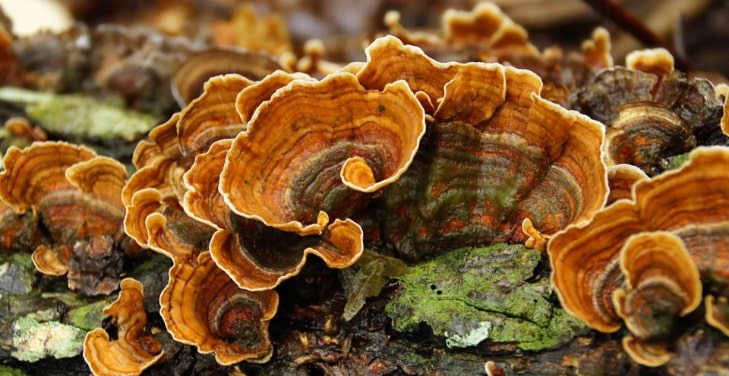
Fresh turkey tail mushrooms growing on logs, showcasing their colorful fan-shaped medicinal fruiting bodies naturally.
What Is Turkey Tail Mushroom?
Turkey tail mushroom is one of the most widely studied medicinal mushrooms due to its rich content of bioactive compounds. Its distinctive shape and high biological value make it a familiar ingredient in traditional medicine and modern health supplements.
Scientific Classification
Turkey tail mushroom, scientifically known as Trametes versicolor, belongs to the Polyporaceae family. This mushroom grows on decaying wood in temperate and subtropical forests. The cap spreads into many thin layers with concentric color bands resembling a turkey tail, creating a unique identifying feature and the origin of its common name.
Bioactive Compounds
Turkey tail mushroom contains high levels of beta-glucan, polysaccharide (PSP), polysaccharide-K (PSK), polyphenols, and natural antioxidants. These compounds help regulate the immune response, support the balance of the gut microbiome, and protect cells against oxidative stress. This diverse chemical composition has driven numerous medical studies over the past decades.
Traditional and Modern Uses
Traditional East Asian medicine has long used turkey tail mushrooms to improve health and boost immunity. Today, scientists continue to evaluate the potential of this mushroom in the fields of immunity, digestive health, and holistic care, thereby expanding its application in modern nutritional and medical practices.
Nutritional Profile and Active Compounds
Turkey tail mushrooms provide many valuable bioactive compounds, forming the basis for the health benefits that have been studied extensively. Their rich chemical composition makes them a prominent source of nutrition and medicine.
Polysaccharides and Beta-Glucans
Turkey tail mushrooms contain beta-glucan and specific polysaccharides such as PSK and PSP. These compounds regulate immune cell activity, help maintain a healthy gut microbiome, and support antioxidant responses in the body.
Vitamins, Minerals, and Phytochemicals
This mushroom also provides potassium, phosphorus, selenium, and numerous phenolic and flavonoid compounds. The combination of micronutrients and phytochemicals provides high biological value, supporting cellular function, promoting metabolism, and enhancing overall health.
Potential Health Benefits
Turkey tail mushrooms have attracted scientific attention for their ability to support various important physiological functions. Numerous studies continue to clarify the role of these compounds in enhancing health and maintaining the body's balance.
Immune Support
Beta-glucan, PSK, and PSP stimulate immune cell activity, enhancing recognition and response to harmful agents.
Gut Health
Polysaccharides act as prebiotics, nourishing beneficial gut bacteria, enhancing microbiome diversity, and supporting digestive function.
Antioxidant Activity
Phenolic and flavonoid compounds help neutralize free radicals, contributing to cell protection and maintaining tissue health in various organs.
Healthy Aging
The bioactive compounds in turkey tail mushrooms support immune balance, promote metabolic health, and help maintain physical fitness over time.
Turkey Tail Mushroom and Cancer Research
Turkey tail mushrooms have become a prominent research topic in cancer research due to their high content of bioactive compounds that can regulate immunity. Scientific studies continue to expand our understanding of this mushroom's role in supportive care and in improving treatment quality.
PSK and PSP in Clinical Research
Polysaccharide-K (PSK) and polysaccharide (PSP) have attracted the attention of many research groups due to their ability to stimulate immune cell activity. Several countries have included PSK in supportive treatment protocols for certain types of cancer to help enhance immune response and improve overall health.
Potential Support During Cancer Care
Turkey tail mushrooms support immune system maintenance, improve gut microbiota balance, and contribute to improved physical condition during treatment. Many researchers continue to evaluate the impact of these compounds on patients' recovery and quality of life.
Current Evidence and Future Directions
Results from preclinical and clinical studies continue to expand the scientific basis for turkey tail mushroom. Experts are focusing on evaluating optimal dosages, durations of use, and suitable patient groups to effectively exploit the potential of this mushroom in modern medicine.
Other Emerging Health Applications
Beyond its role in immunity, turkey tail mushroom opens up many new avenues of research in metabolic health and physical recovery. The diversity of its bioactive compounds motivates numerous trials to further explore the application value of this mushroom.
Metabolic and Inflammatory Health
Studies have shown that beta-glucan and polyphenols help support energy metabolism, maintain blood sugar balance, and promote the activity of mechanisms that regulate inflammatory responses. These effects contribute to tissue protection and the maintenance of function in many organs of the body.
Recovery and General Wellness
Turkey tail mushroom supports recovery after periods of stress or illness by promoting a balanced gut microbiome and enhancing immune function. Many scientists continue to evaluate the potential of this mushroom for preventive healthcare and for improving long-term quality of life.
How to Take Turkey Tail Mushroom
Turkey tail mushroom is available in various formulations, allowing users to choose the method of use that best suits their health goals. Using the correct product form and dosage helps optimize the value of the bioactive compounds.
Capsules and Tablets
Capsules and tablets provide a stable dose of active ingredients, are convenient for daily use, and allow for precise control of dosage.
Powders and Teas
Turkey tail mushroom powder and tea are easily combined with warm water, smoothies, or food. This method offers flexibility and suits many dietary habits.
Recommended Dosage
Dosage depends on the form of the extract, the concentration of active ingredients, and the intended use. Users should follow the manufacturer's instructions or recommendations from a healthcare professional.
Choosing Quality Products
High-quality products typically use the fruiting body, clearly state the beta-glucan content, and undergo independent testing to ensure purity, safety, and consistency.
Who Should Consider Taking Turkey Tail Mushroom?
Turkey tail mushrooms are suitable for many groups of people who want to improve their health through natural bioactive compounds. Choosing the right purpose helps maximize nutritional value and support more effective health care.
People Seeking Immune Support
Those who frequently experience work stress, engage in high-intensity exercise, or wish to maintain a healthy immune system may consider supplementing turkey tail mushrooms as part of a balanced diet.
Individuals Focused on Gut Health
Those concerned about digestive health and the gut microbiota may benefit from prebiotics. These compounds help nourish beneficial bacteria and support a stable gut environment.
Older Adults and Wellness Enthusiasts
Older adults and individuals pursuing healthy lifestyles often choose turkey tail mushrooms to support immune health, maintain cellular vitality, and enhance long-term preventative healthcare.
How to Choose a High-Quality Turkey Tail Supplement
Product quality determines the value of turkey tail mushrooms during use. Evaluating the ingredients, raw materials, and manufacturing process helps users choose products with high purity and stable active ingredient content.
Evaluate Ingredients and Manufacturing Standards
Users should prioritize products that use the fruiting body, clearly state the beta-glucan, PSK, or PSP content, and apply standard extraction processes. Independent testing certifications and GMP standards help ensure the safety, purity, and consistency of each production batch.
Review Label Transparency
Product labels should fully disclose the origin of the ingredients, extraction ratio, dosage, and ingredient list. Transparent information helps consumers assess nutritional value, choose suitable products, and use turkey tail mushroom effectively in their health care plan.
Safety, Side Effects, and Precautions
Turkey tail mushroom generally has a positive safety record when used correctly and with quality-certified products. Understanding potential reactions and key precautions helps ensure effective, individualized supplementation.
Common Side Effects
Some people may experience bloating, digestive discomfort, or slight changes in bowel movements when first starting. These symptoms usually occur as the body adjusts to the fiber and polysaccharides.
Potential Drug Interactions
Turkey tail mushroom may interact with immunomodulatory or anticoagulant medications. A healthcare professional will assess the appropriateness based on the individual's health condition and treatment plan.
Allergic Reactions
Individuals sensitive to mushrooms may experience rashes, itching, or skin irritation after use. Monitoring your body's reaction helps identify abnormal signs early.
Special Precautions
Pregnant women, breastfeeding women, those preparing for surgery, and individuals with autoimmune diseases should consult a healthcare professional before taking supplements to develop a usage plan suitable for their health condition.
Conclusion
Turkey tail mushrooms are a valuable source of bioactive compounds that may support immunity, gut health, and other vital physiological functions. Numerous studies continue to expand our understanding of this mushroom's role in modern healthcare and nutrition.
Choosing quality products, using the correct dosage, and consulting with a healthcare professional will optimize the effectiveness of supplementation. Combining turkey tail mushrooms with a balanced diet, regular exercise, and a healthy lifestyle creates a solid foundation for long-term health and improved quality of life.
Frequently Asked Questions (FAQs)
- Can Turkey tail mushrooms be used daily? – Turkey tail mushrooms can be used daily when taken at appropriate doses and sourced from quality products. Consistent use allows their bioactive compounds to support immune and gut health over time.
- How long does it take for Turkey tail mushrooms to show effects? – The time required to notice benefits varies based on individual health, diet, lifestyle, and product formulation. Many people use turkey tail supplements for several weeks as part of a long-term wellness routine.
- Can Turkey tail mushrooms be used with other medicinal mushrooms? – Turkey tail mushrooms are commonly combined with reishi, lion's mane, or cordyceps in mushroom supplement blends. A healthcare professional can help determine the most appropriate combination based on individual health goals.
- Who should consult a healthcare professional before using them? – Pregnant or breastfeeding women, individuals with autoimmune conditions, those preparing for surgery, and people taking immunomodulatory or anticoagulant medications should seek medical advice before using turkey tail supplements.
- Can turkey tail mushrooms be obtained from everyday foods? – Turkey tail mushrooms have a tough, fibrous texture and are most commonly consumed as extracts, capsules, powders, or teas. Standardized supplements provide consistent amounts of bioactive compounds for convenient use.
