
Quercetin was once considered a simple plant compound, but its dihydrate form opens up a completely different perspective in nutritional science. This hydrated state is commonly found in research materials and high-standard supplement products.
Quercetin dihydrate offers a defined chemical structure and clear physical stability. This form attracts attention due to its potential for quality control, precise dosing, and a wide range of applications in modern nutrition.
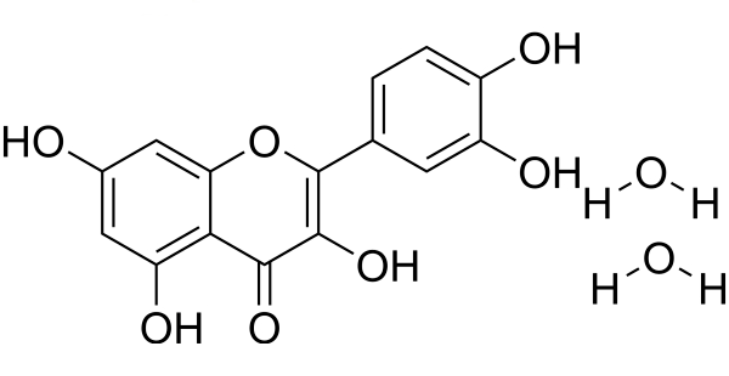
Quercetin dihydrate is a hydrated form of quercetin used in supplements and research.
What Is Quercetin Dihydrate?
Quercetin dihydrate is a stable crystalline form of quercetin, widely used in research and supplement formulations. This compound possesses distinct chemical characteristics, a defined structure, and high consistency in practical applications. The presence of bound water gives the dihydrate form its unique value in scientific and industrial contexts.
Chemical Definition
Quercetin dihydrate is the flavonoid quercetin bound to two water molecules in a crystal lattice. This structure exhibits a fixed hydration state, enabling accurate identification in chemical analysis and quality control.
Naming and Classification
The name "dihydrate" directly reflects the molecular structure. This designation is consistently used in the scientific literature, laboratory standards, and material profiles.
Role in Scientific Context
The dihydrate form is commonly found in research due to its physical stability and reproducibility of results. This supports the evaluation of quercetin's characteristics, purity, and behavior across different systems.
Chemical Structure and Hydration State
The chemical structure of quercetin dihydrate exhibits a sophisticated arrangement of the flavonoid framework and linked water molecules. This hydration state provides a distinct identifying characteristic in material analysis and pharmaceutical research. Each structural element plays a specific role in the compound's overall properties.
Flavonoid Core Structure
The quercetin framework consists of three characteristic linked rings, each bearing numerous active hydroxyl groups. This structure forms the basis for molecular interactions and biological activity.
Hydration Bonding Pattern
Two water molecules are stably linked within the crystal lattice via hydrogen bonds. This arrangement maintains a consistent dihydrate state.
Molecular Weight Implications
The presence of water increases the molecular weight in a defined way. This parameter is used precisely in formulation and quantification calculations.
Crystalline Organization
Quercetin dihydrate forms a highly ordered crystalline structure. This characteristic supports the material's analytical, storage, and standardization capabilities.
How Quercetin Dihydrate Is Manufactured
Quercetin dihydrate is manufactured through a tightly controlled process to ensure stable hydration structure and high purity. Each stage is designed to produce a consistent crystalline form that meets research and commercial application requirements. This process combines extraction technology and precise crystallization techniques.
Extraction and Initial Processing
Quercetin is extracted from flavonoid-rich plant sources using a selective solvent. The resulting solution undergoes filtration and concentration steps to provide the foundation for controlled crystallization.
Controlled Crystallization and Hydration
Crystallization takes place under defined temperature and humidity conditions, allowing two water molecules to integrate into the crystal lattice. This stage produces quercetin dihydrate with a stable structure, uniform morphology, and the ability to meet industrial quality standards.
Physical Properties and Stability
Quercetin dihydrate possesses distinct physical properties that support its identification, storage, and formulation applications. Its stable hydration state helps shape the compound's behavior under standard environmental conditions. These characteristics have high practical value in research and production.
Appearance and Crystalline Form
Quercetin dihydrate appears as a pale yellow to dark yellow crystalline powder. Its clear crystal structure facilitates morphological analysis and the control of material homogeneity.
Solubility Characteristics
This compound exhibits characteristic solubility in suitable solvents. This property supports formulation, testing, and further formulation development.
Stability Under Storage Conditions
Quercetin dihydrate maintains stability when stored in a dry, airtight environment at controlled temperatures. A consistent dihydrate state helps maintain quality and physical parameters over time.
Quercetin Dihydrate vs. Anhydrous Quercetin
Quercetin dihydrate and anhydrous quercetin represent two physical states of the same flavonoid, each possessing distinct structural characteristics for specific uses. Correctly identifying the existing form ensures accuracy in research, labeling, and formulation development. The differences are evident at the molecular level and in material behavior.
Hydration State
Quercetin dihydrate contains two water molecules bound within the crystal lattice. Anhydrous quercetin exists in a water-free state, resulting in a distinct physical form.
Molecular and Weight Profile
The dihydrate form has a defined molecular weight due to its hydration. The anhydrous form exhibits molecular parameters consistent with the pure flavonoid structure.
Handling and Processing Behavior
Quercetin dihydrate exhibits high stability under standard storage conditions. Anhydrous quercetin is suitable for processes requiring tight moisture control.
Formulation Context
Each form is selected based on technical objectives, manufacturing standards, and specific application requirements.
Applications in Supplements and Research
Quercetin dihydrate plays a crucial role in both the nutritional supplement industry and scientific research due to its stability and high standardization capabilities. This hydrated form supports dosing, quality control, and reproducibility in a wide range of applications. Using the correct form offers clear practical value for manufacturers and academics.
Dietary Supplement Formulations
Quercetin dihydrate is widely used in dietary supplements due to its stable physical properties and ease of handling. Its uniform crystalline form enables precise, consistent blending, encapsulation, and content control.
Laboratory and Scientific Research
In research, quercetin dihydrate serves as a standard material for biological and chemical experiments. Its defined structure and high purity support mechanism analysis, characterization, and the development of specialized functional applications.
Absorption and Bioavailability Context
The absorption and bioavailability of quercetin dihydrate are of great interest in nutritional science and supplement formulation. This hydrated form possesses physical and chemical characteristics that directly influence how the compound interacts in the digestive system. Understanding the absorption context helps guide effective and consistent application.
Interaction With the Digestive Environment
Quercetin dihydrate participates in dissolution and dispersion in the digestive environment through a specific mechanism. Its stable crystalline state supports uniform contact with digestive fluids.
Role of Hydration State
The two water molecules linked in the crystal structure contribute to shaping the molecular behavior. This factor influences how quercetin is released during use.
Formulation and Absorption Strategy
Quercetin dihydrate is often combined with formulation support ingredients to optimize bioavailability. This approach reflects the role of raw material form in modern supplement product design.
Safety Profile and Side Effects
The safety profile of quercetin dihydrate is based on usage data, clinical observations, and the context of scientific research. This standardized hydrated form is typically found in products with tightly controlled quality and dosage. Understanding its safety characteristics helps guide responsible and appropriate use.
General Tolerance
Quercetin dihydrate is well-tolerated when used within its usual application range. The body absorbs this compound via the familiar biological mechanisms of flavonoids.
Reported Physiological Responses
Some mild physiological reactions have been reported with high-dose use or in individuals with individual sensitivity. These manifestations are transient and easily identifiable.
Population-Specific Considerations
Groups with specific physiological conditions are often advised to pay attention to dosage and timing of use. This approach supports overall safety.
Role of Quality and Dosage
Raw material purity and dose control are central to the safety profile of quercetin dihydrate. Clear manufacturing standards help maintain a high level of reliability.
Regulatory Status and Labeling Standards
The legal status and labeling standards of quercetin dihydrate reflect the level of control over dietary supplements and research chemicals. This compound is covered by various regulatory frameworks, depending on its intended use and distribution market. Compliance with regulations forms the basis of product transparency and reliability.
Dietary Supplement Classification
Quercetin dihydrate is often classified as a dietary supplement in functional food regulatory systems. This classification requires meeting criteria for safety, origin, and technical documentation.
Labeling and Ingredient Disclosure
Labeling information focuses on the chemical name, form of existence, and dosage. Clear presentation assists consumers and regulatory agencies in evaluating the product.
Quality and Compliance Framework
GMP standards and quality control procedures are applied throughout the supply chain. This system maintains consistency, traceability, and compliance with applicable regulations.
Quality, Purity, and Sourcing Factors
The quality, purity, and sourcing of quercetin dihydrate directly determine its value for research and supplement applications. This raw material requires comprehensive control processes to ensure consistency across production batches. Each element in the supply chain contributes to shaping ultimate reliability.
Purity and Analytical Testing
Quercetin dihydrate is considered high-quality when it meets clear analytical criteria. Methods such as HPLC and spectral testing help confirm purity, bound water content, and crystal structure.
Raw Material Sourcing
Plant-based raw materials are selected based on stability and traceability. Harvesting and initial processing directly affect the final product's characteristics.
Supplier Standards and Documentation
Reputable suppliers maintain complete technical records and transparent quality control systems. This approach supports long-term consistency and reliability.
Conclusion
Quercetin dihydrate demonstrates significant scientific value through its stable hydration structure, consistent physical properties, and high standardization potential. This form effectively supports research, manufacturing, and application in the field of nutritional supplementation.
From manufacturing processes and quality control to safety and legal contexts, quercetin dihydrate provides a reliable foundation for targeted use. Its structural and origin clarity optimizes long-term applicability.
Discover the potential benefits of berberine with Ceylon cinnamon and how this combo may support blood sugar and heart health.
Frequently Asked Questions (FAQs)
-
What is Quercetin Dihydrate in Nutrition?
Quercetin dihydrate is a stable hydrated form of quercetin commonly used in supplements. Its defined structure allows for accurate dosing, strong quality control, and consistency in nutritional formulations. -
How does Quercetin dihydrate differ from regular quercetin?
This form contains two water molecules within its crystal lattice, giving it distinct physical and chemical properties that influence stability, molecular weight, and manufacturing processes. -
How does the dihydrate form affect absorption?
The hydration state shapes how quercetin dissolves and disperses in the digestive tract, supporting formulation approaches designed to optimize practical bioavailability. -
Is Quercetin dihydrate safe for long-term use?
When used at appropriate doses, quercetin dihydrate demonstrates good tolerability. Its safety profile is supported by usage data and standardized production practices. -
How can you choose high-quality quercetin dihydrate?
Look for products with verified purity, clear analytical records, transparent sourcing, and GMP-compliant manufacturing. Full traceability of raw materials is a key indicator of quality.
